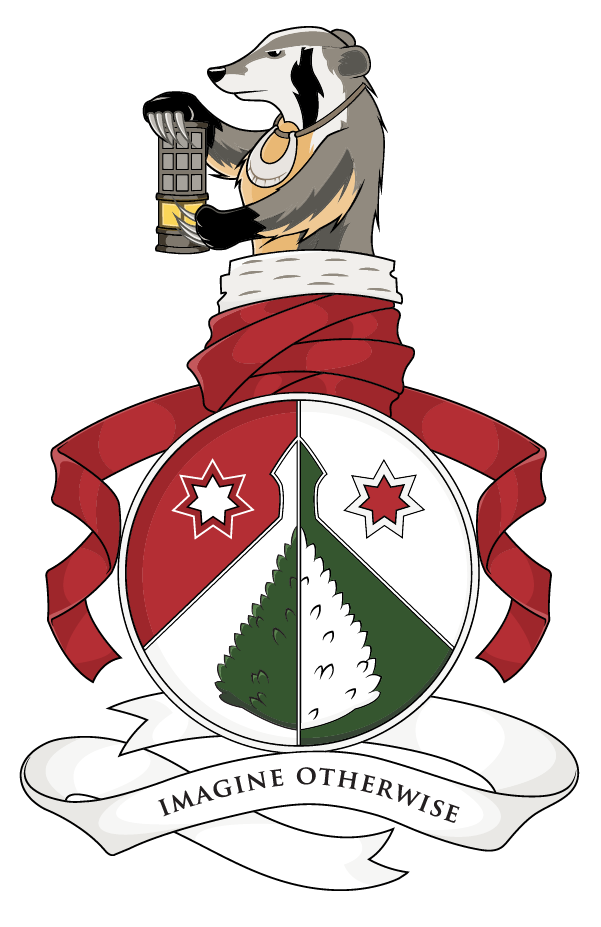
I’ve had a lifelong fascination with diverse traditions of symbolism, emblemry, iconography, and heraldry, and the ways in which distinctive and carefully designed visual images can distill and capture the essence of identity, values, and relationships of significance. This, plus my lifelong love of fantasy literature and film, made an interest in heraldry almost inevitable. When I was working on the early stages of my badger book and looking for good images to include, I came across Canadian heraldry, which is connected to European traditions but is far more inclusive and expansive, and is deeply attentive to the cultural, zoological, and biological particularities of this land and the diverse peoples who call it home.
This intrigued me enough to explore further, and I discovered that any Canadian citizen could apply for armorial bearings from the Canadian Heraldic Authority. What really captured my attention was that there were numerous Indigenous armigers (bearers of arms), and that they made what seems to be a very European tradition fully their own. No question this is a vexed relationship, and there are many ways through which Canadian heraldry assumes and asserts a colonial relationship to the symbolism of place, but it does more than that, too, and this tension between the various ways that belonging is asserted, contested, and considered by many different communities through this modern expression of an increasingly obscure tradition piqued my interest. In short order I decided that we needed some Cherokee representation in the ranks! I’ve since found that in Canada especially there are many knowledgeable enthusiasts who love symbols and emblems of all types and for whom personal generosity and contributions to community are far more important than arbitrary and exclusivist presumptions of rank, class, or creed. I’m considering undertaking a book-length project on the relationship between Indigenous emblemry/heraldry and those of settler heraldry and its European antecedents in various settler colonial contexts.
My work with the CHA on the design of my own arms, especially with Bruce Patterson, Deputy Chief Herald of Canada, was a delightful experience. (Bruce is both learned and encouraging, and he was as enthusiastic about the project as I was–the beauty and balance of all the elements are in large part due to his keen eye for heraldic design, and he was fully consultative and culturally respectful.) The full description of the arms (the blazon) is online here in the CHA’s Public Register of Arms, Flags and Badges of Canada. See here for more information about the Authority, and here to browse the Register and see some of the other amazing Canada-specific coats of arms. The original concept was by Bruce Patterson, with assistance from the heralds of the CHA; the artist is Melissa Aberin, and the calligrapher is Shirley Mangione. I later commissioned Kat Moyou to do a digital version of the arms, and this is the featured image here.